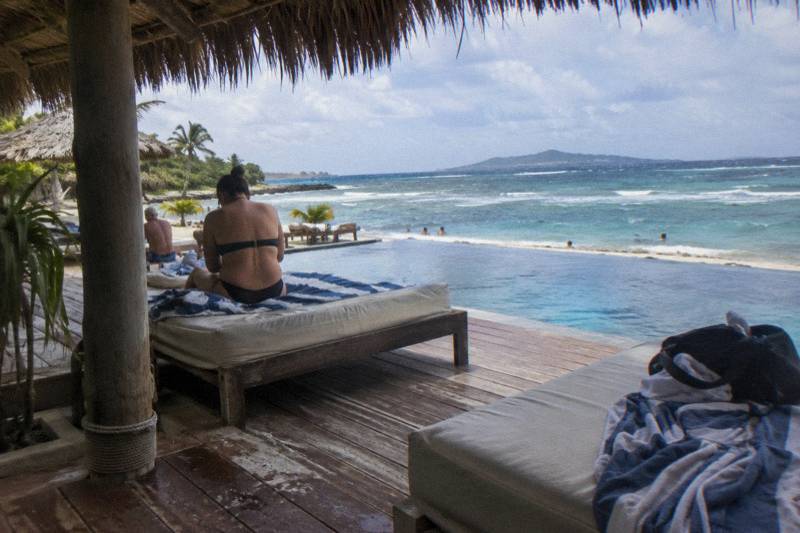
Malamala Island Weather: The Best Time Of Year For A Day Trip
The Mamanucas stay warm all year, so the real question is not whether the sun shines but how much rain, wind and UV you are willing to plan around.
Short answer
The driest months for a Malamala Beach Club day trip are May to October, when rain drops to 66 to 100 mm per month against 174 to 312 mm from November to April. Sea temperature stays 26 to 29 degrees all year and UV hits 11 most months, so sun protection matters in every season. Services run on scheduled departures and remain subject to sea and weather.
Planning around the weather is the single most useful thing you can do before booking a beach club day in Fiji, because the pass itself is fixed: the catamaran leaves Port Denarau, you spend the day on the island, and the boat brings you back. The weather decides how that day feels. This guide works through the climate averages month by month, explains what each season actually means for swimming, sunbathing and the crossing, and sets out the operator's rules on cancellations and weather disruptions so you know where you stand before you pay.
If you are still deciding how long to stay rather than when, the half day versus full day comparison covers that question separately. This page is about timing.
| Quick fact | Detail |
|---|---|
| Drier months | May to October, 66 to 100 mm of rain per month in the climate averages |
| Wetter months | November to April, 174 to 312 mm per month |
| Sea temperature | 26 to 29 degrees all year |
| UV | Maximum 11 in most months, 7 to 9 in the cooler dry months |
| Daytime maximums | 27 to 31 degrees every month |
| Cyclone season | Roughly November to April, general guidance rather than an official quote |
| Sailing status | Scheduled departures, subject to sea and weather |
| Cancellation | Free up to 24 hours before travel on the booking page; inside 24 hours, 100 percent |
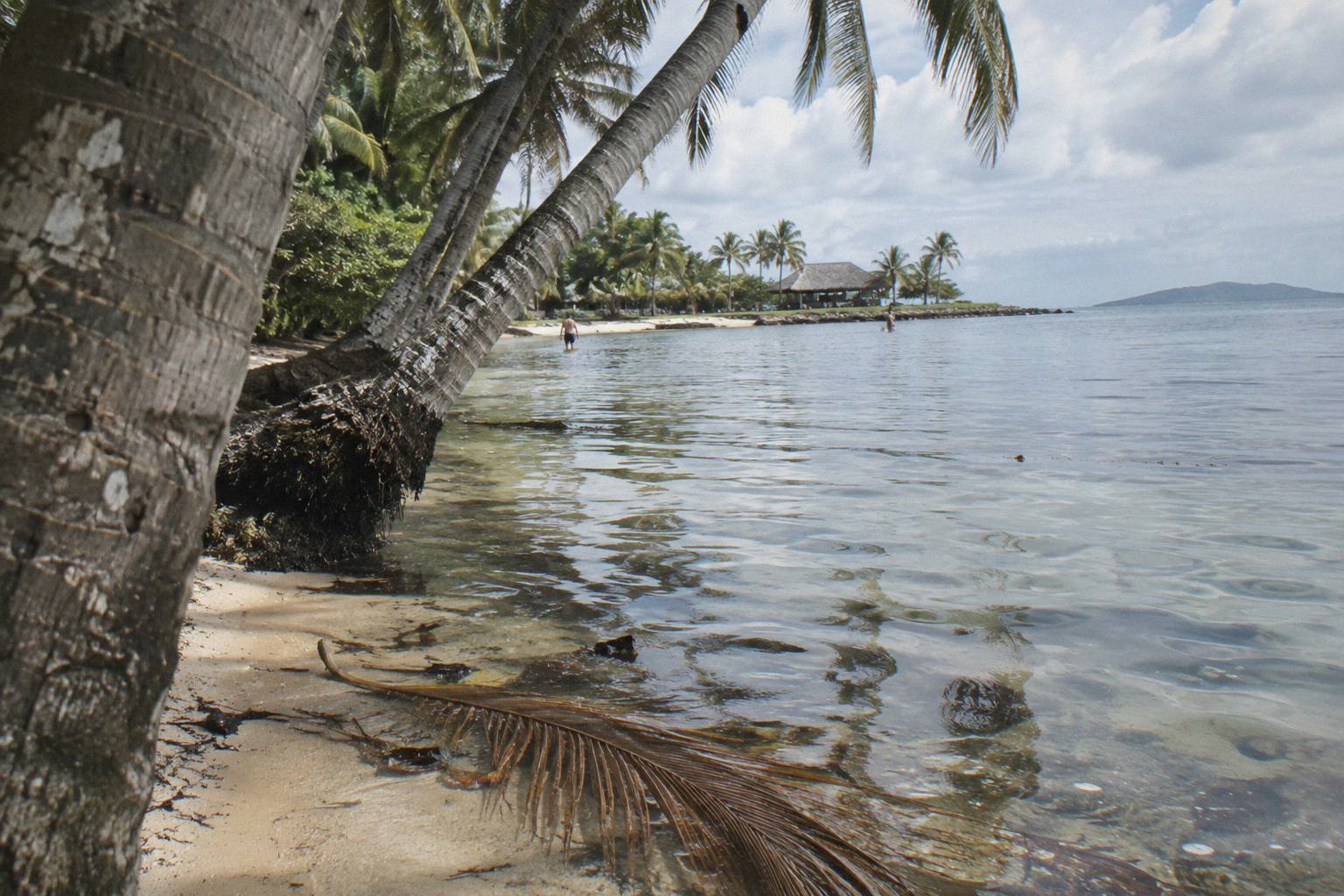
What The Climate Averages Say Month By Month
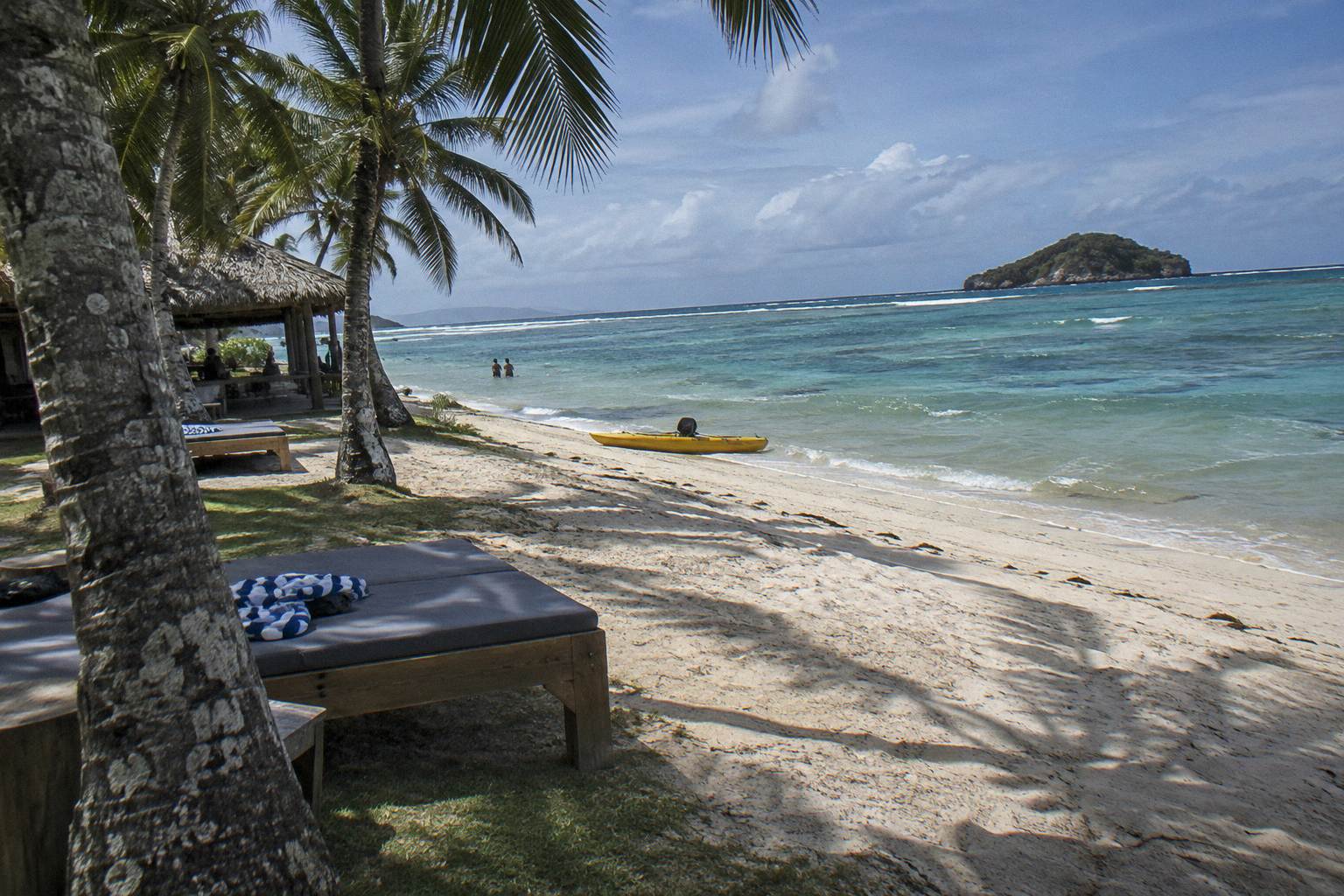
The Mamanuca climate averages show a warm, wet summer and a slightly cooler, much drier winter, with no month below 27 degrees at midday. Rainfall is the number that moves, from 312 mm in March down to 66 mm in July, a nearly fivefold difference. These figures are climate averages from a third-party aggregator, not a forecast, and no month is guaranteed dry or wet.
The table below is the full monthly picture for the Mamanuca Islands, drawn from published climate averages. The source rounds some numbers, and the February minimum temperature prints unusually low on that source, so the reliable read is the range rather than any single figure: nights sit roughly in the low twenties, days in the high twenties to low thirties, all year.
| Month | Daytime max (C) | Night min (C) | Rain (mm) | Rain days | Sea (C) | Max UV |
|---|---|---|---|---|---|---|
| January | 31 | 22 | 269 | 18 | 29 | 11 |
| February | 31 | low 20s | 264 | 19 | 29 | 11 |
| March | 30 | 21 | 312 | 22 | 29 | 11 |
| April | 30 | 21 | 199 | 20 | 29 | 11 |
| May | 29 | 20 | 91 | 19 | 28 | 8 |
| June | 28 | 20 | 74 | 18 | 27 | 7 |
| July | 27 | 20 | 66 | 18 | 26 | 7 |
| August | 27 | 21 | 73 | 19 | 26 | 9 |
| September | 28 | 21 | 81 | 17 | 26 | 11 |
| October | 29 | 22 | 100 | 17 | 27 | 11 |
| November | 30 | 22 | 124 | 17 | 28 | 11 |
| December | 31 | 22 | 174 | 17 | 28 | 11 |
Read the rain days column with care, because it does what most first-time visitors misread. Even in March, the wettest month, the averages point to roughly 22 rain days out of 31, but tropical rain days are frequently short, heavy afternoon downpours rather than all-day greyness. A morning crossing on a wet-season day can still be bright, and an afternoon storm can clear within the hour. Equally, a dry-season month can still deliver a squall. The averages describe the odds, not your date. The underlying figures come from a published Mamanuca climate averages table, which is a third-party aggregator rather than Fiji's official meteorological service.
What the averages do establish firmly is that the sea never gets cold. Water temperatures run from 26 degrees in the cooler months to 29 degrees in the warmer ones, a range where swimming, snorkelling and paddle boarding stay comfortable in any season without a wetsuit. For a beach club built around an infinity pool, beachside cabanas and non-motorised water gear, that consistency matters more than air temperature, which barely moves across the year.
Wet Season Or Dry Season: Which Suits Your Day Trip
May to October is the statistically safer bet for a full day on the island, with rain days around 17 to 19 per month and lower humidity. November to April brings hotter, more humid conditions, heavier bursts of rain and the cyclone season, but also softer availability outside the peak weeks. Neither window is a guarantee, and the right answer depends on weather risk versus crowd levels and budget.
The drier window overlaps with the southern hemisphere winter, which is also peak visiting season for Fiji. June through August delivers the lowest rainfall, the mildest daytime maximums at 27 to 28 degrees, and sea temperatures at the bottom of the range but still 26 to 27 degrees. The trade-off is that everyone else has read the same averages. Departures in this window fill earlier, and the island's pool deck, cabanas and beach club area carry more people on any given day. If you want the weather odds tilted your way and accept the company, this is your window.
- South Sea Cruises Full DayUS$96
- Rosie Holidays Full Day, 9 HoursUS$106
- Helicopter Day TripUS$543.69
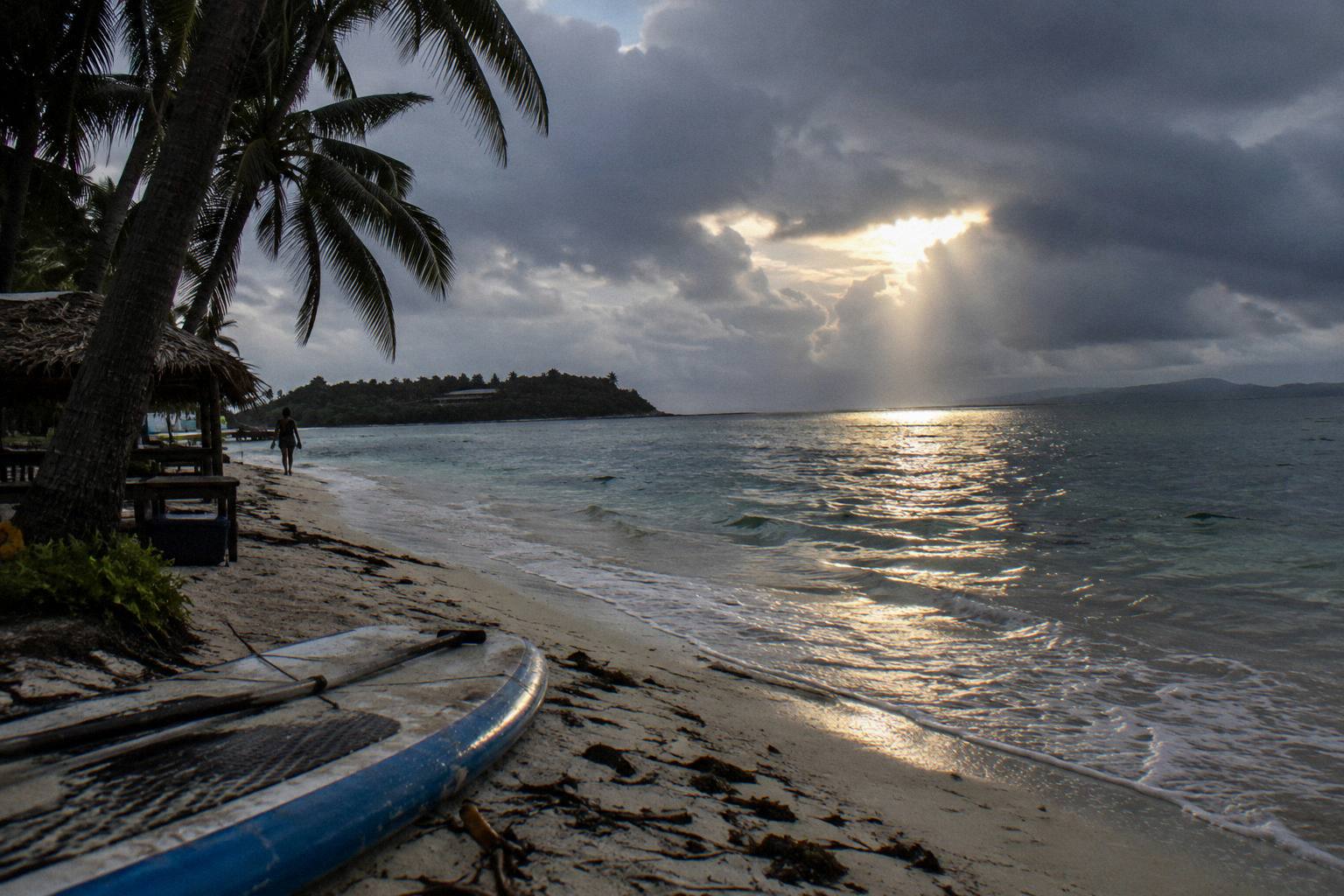
The wetter window from November to April is a more nuanced decision than the rainfall column suggests. A rain day in the tropics is often a violent, short afternoon storm that leaves the morning untouched, and many wet-season days deliver hours of sunshine between showers. March is the statistically wettest month at 312 mm in the averages, and January and February follow close behind. The cyclone season runs roughly November to April as a general rule, and while direct strikes on any given week are rare, the possibility of a named system disrupting travel is real in these months, and travel insurance is recommended in the operator's terms. What you get in exchange is the Fiji the brochures photograph: intense greens, warm sea at 28 to 29 degrees, and noticeably fewer competitors for a beachside day bed.
Season also changes the rhythm of the day itself. In the dry months the sea breeze arrives more reliably and the middle of the day is comfortable in shade. In the wet months the morning is often the finest part of the day, before humidity builds and convection clouds stack up over the larger islands. That pattern favours the half day departure, which leaves Port Denarau at 12.00pm, less obviously, and favours the full day 9.30am sailing more, since you arrive at 10.00am and claim your spot before the sky decides what the afternoon will do. The South Sea Cruises Full Day trip, rated 4.6 across 587 reviews and from USD 96 per person, uses exactly that morning departure, which is worth weighing if your travel dates sit inside the wetter months.
One structural point in favour of shoulder months: May and October sit at the edges of the dry window, with 91 and 100 mm of rain respectively, UV easing to 8 in May, and thinner crowds than the June to August core. If your dates are flexible, those two months offer most of the dry-season weather advantage with less of the peak-season squeeze.
What Happens When Weather Cancels Your Trip
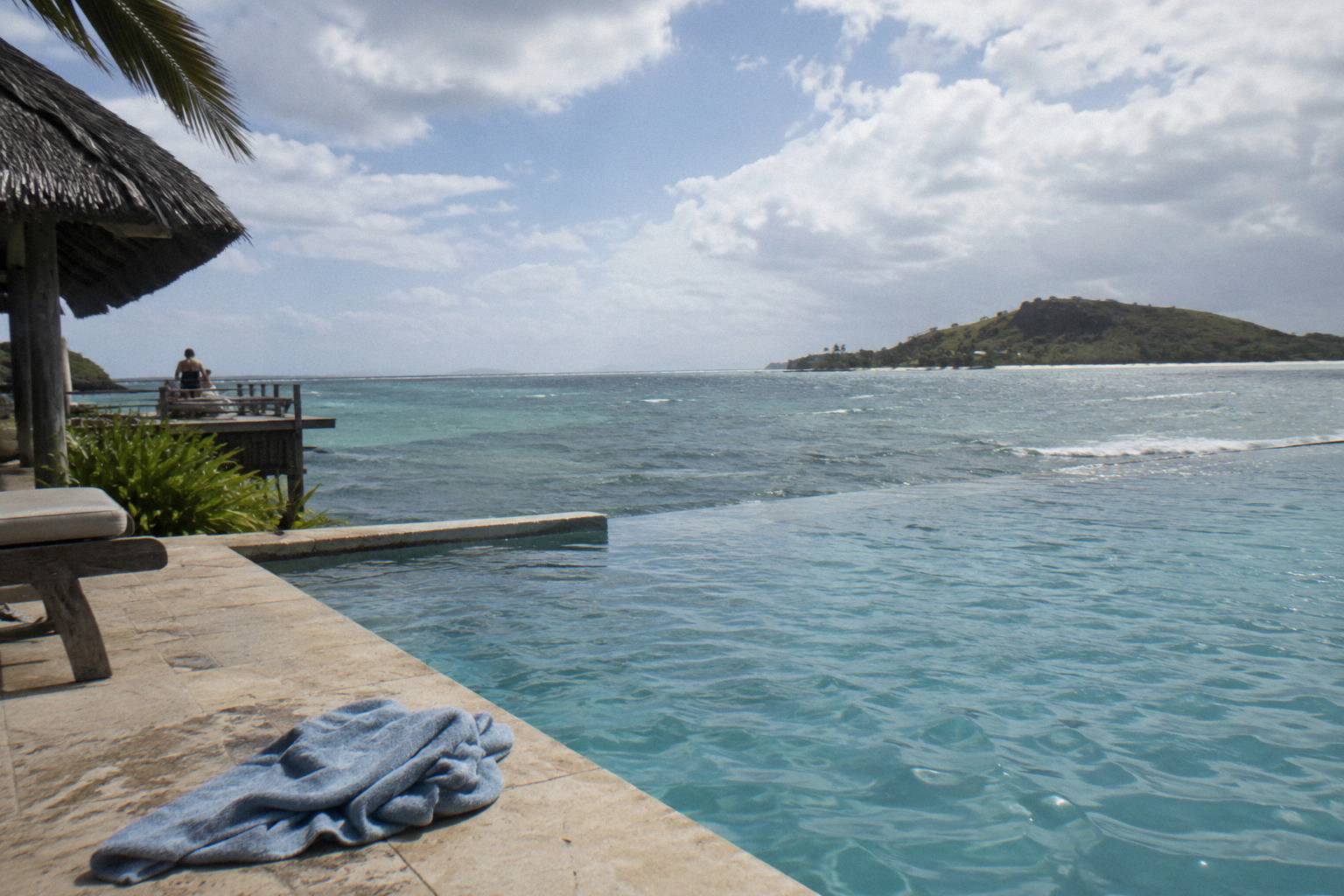
All Malamala Beach Club services are subject to sea and weather, and the operator's liability for a weather disruption is limited to an alternative cruise or a refund of the fare, per the published terms. Your own cancellation is separate: free cancellation applies up to 24 hours before travel on the booking page, inside 24 hours the fare is 100 percent, and amending to another South Sea Cruises day trip or date carries no fee.
The distinction between those two situations matters when a storm system is forecast but not yet confirmed. If you cancel your own booking more than 24 hours out, you pay nothing. If you wait inside the 24-hour window and then cancel, you pay in full even if the forecast looks poor, because the trip has not been cancelled by the operator. If the operator cancels because sea conditions are unsafe, the terms limit liability to an alternative cruise or a refund of the fare. Reading those rules before you book, on the official terms and conditions page, removes most of the confusion later.
A practical approach for a wet-season booking is to hold your travel dates loosely. The amendment rule means a change to another South Sea Cruises day trip or another date carries no fee, so if a forecast turns bad two days out, you can shift the day rather than lose the fare. That flexibility is the single best hedge against wet-season weather risk, and it costs nothing. The operator also asks that non-local bookings be reconfirmed the day before travel through the Port Denarau office, which is the natural moment to ask about conditions on your date.
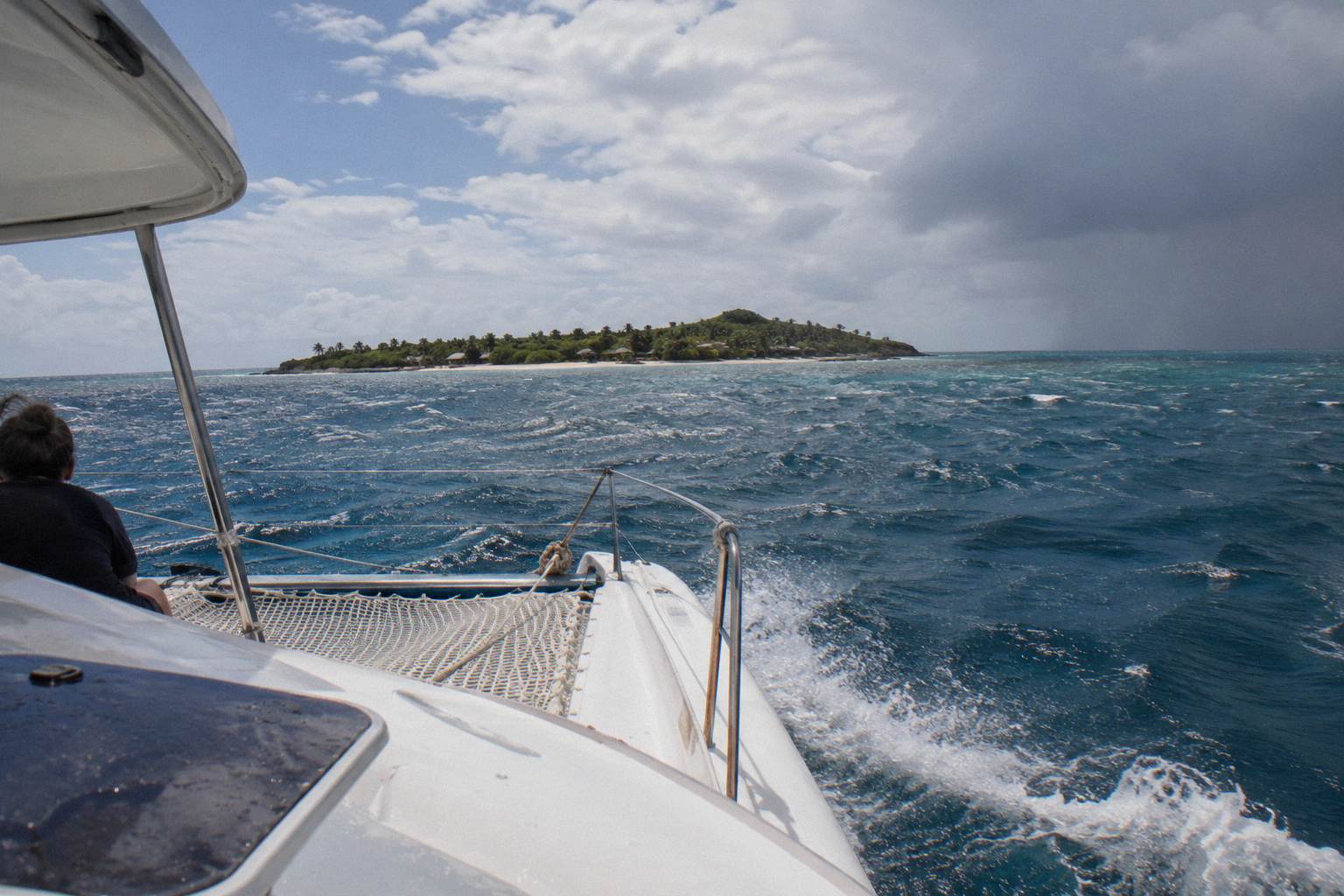
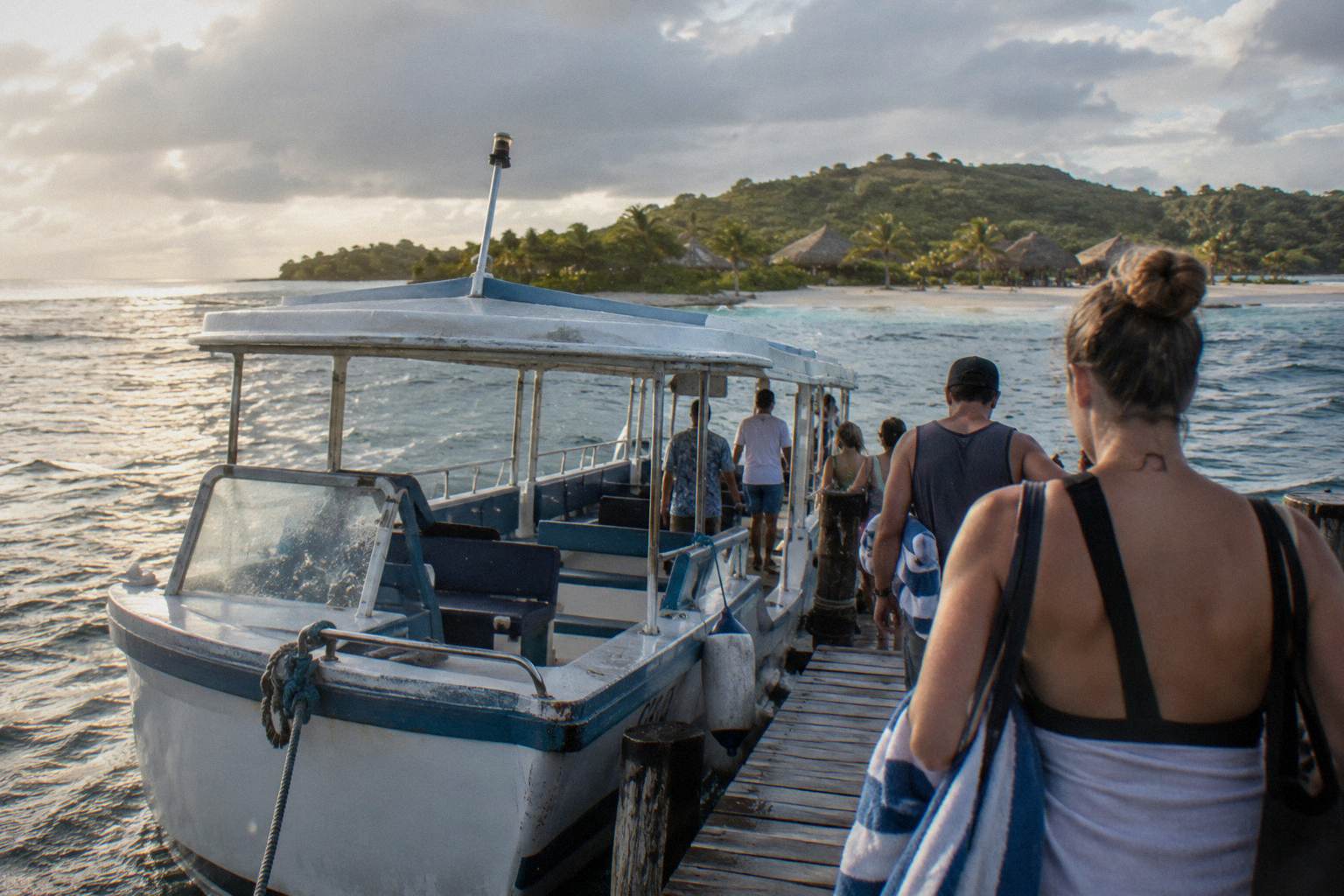
There is a second layer of weather exposure worth naming: the crossing itself. The transfer is a high-speed catamaran, and the same conditions that make a beach day marginal can make the 30-minute sailing lumpy, particularly for passengers sensitive to motion. The operator's guidance on what to bring, published on the South Sea Cruises day trip page, is worth reading with the crossing in mind. If the forecast shows strong winds and you know rough water bothers you, that is a reason to consider a date change, not just a comfort preference.
Sea Temperature, UV And Sun Safety On The Island
Sea temperature in the Mamanucas stays between 26 and 29 degrees every month of the year, so the water is never the reason to delay a trip. UV is the opposite story: the maximum index reaches 11, the top of the standard scale, in most months, and even the cooler dry months run 7 to 9. On an island where you will spend hours by the pool and in the water, sun protection is a year-round planning item.
The UV column deserves more attention than most visitors give it. An index of 11 means unprotected skin can burn in a very short time at midday. The island day runs from late morning to late afternoon, squarely across the peak UV hours, and the sea and pool amplify exposure by reflecting radiation back at you. The practical answer is straightforward: sunscreen applied often, a hat, shade during the middle hours, and sunglasses. The island's merchandise shop sells sunscreen, hats and sunglasses if anything is forgotten, and the operator's what-to-bring list names sunscreen, a hat, swimwear and beach footwear explicitly.
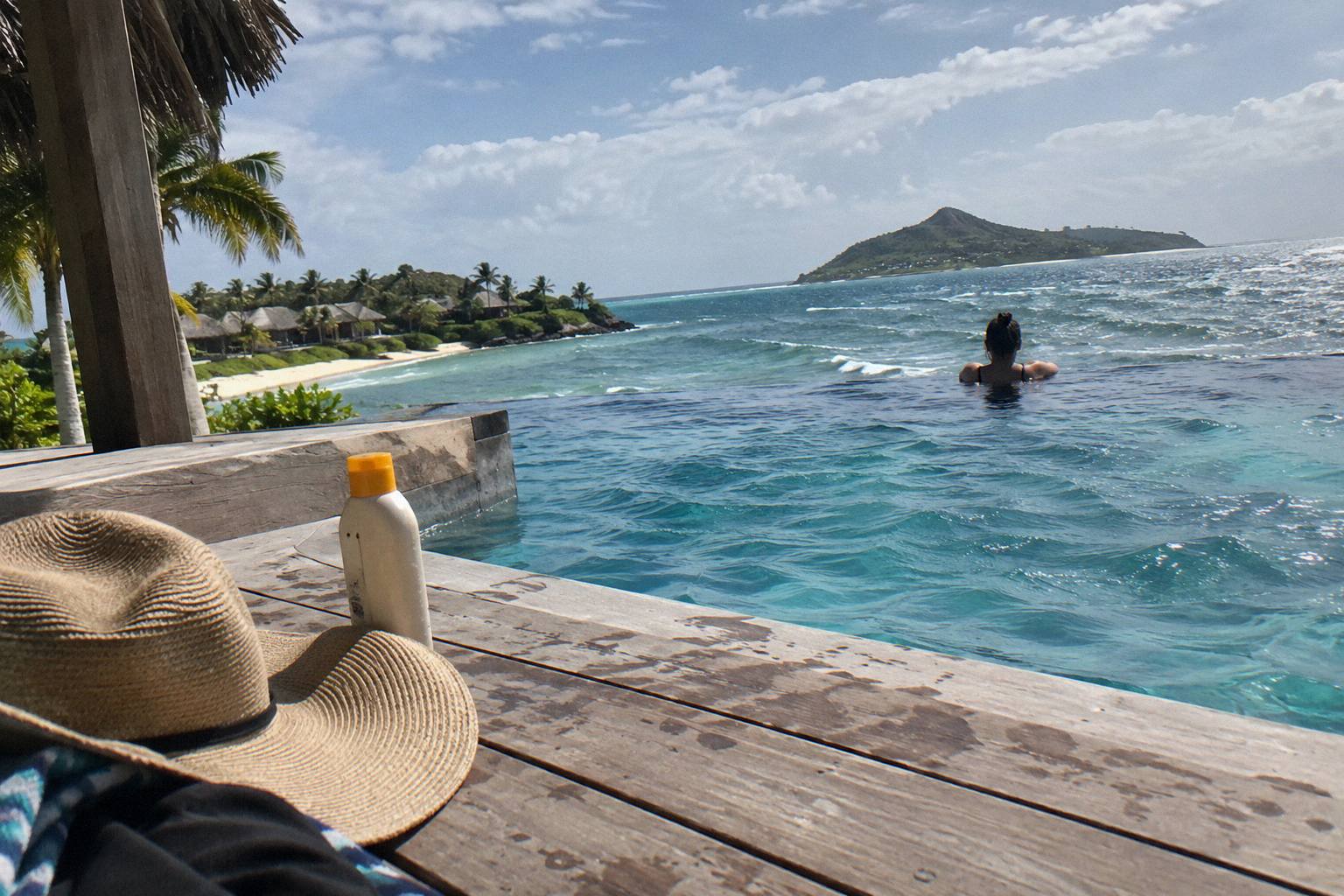
Because the sun is a constant, the season you choose changes how you manage the day rather than whether you need to. In May to July, when UV eases to 7 to 8 and daytime maximums drop to 27 to 29 degrees, long stretches of sunbathing are comfortable for most people. From September through April, when the index returns to 11, the sensible pattern is to alternate water, shade and reapplication, and to treat the beachside cabanas and poolside day beds, which are paid upgrades on the island, as part of a sun strategy rather than pure luxury. Four cocktails cost FJ$109 if you ask on arrival, and a shady day bed with a drink in hand is a defensible answer to a hot, humid afternoon.
For the water itself, nothing about season gates the activities. Snorkel gear, kayaks and paddle boards are included in the day pass, flotation devices are available for non-swimmers, and the sea is at its warmest, 29 degrees, from January through April. Families planning around small children often prefer the wetter months precisely because the water is at bath temperature and the crowd pressure is lower, a trade-off covered in more detail in the guide to whether the island works for kids.
How To Read The Forecast Before You Book
Book your pass on the season, then manage the weather in the final week with the forecast, not before. The two things worth watching are wind speed, which governs the crossing and sea state, and any named tropical disturbance during cyclone season. A forecast of rain alone is rarely a reason to change a beach club day, because tropical showers pass quickly; sustained wind and swell are what actually disrupt sailings.
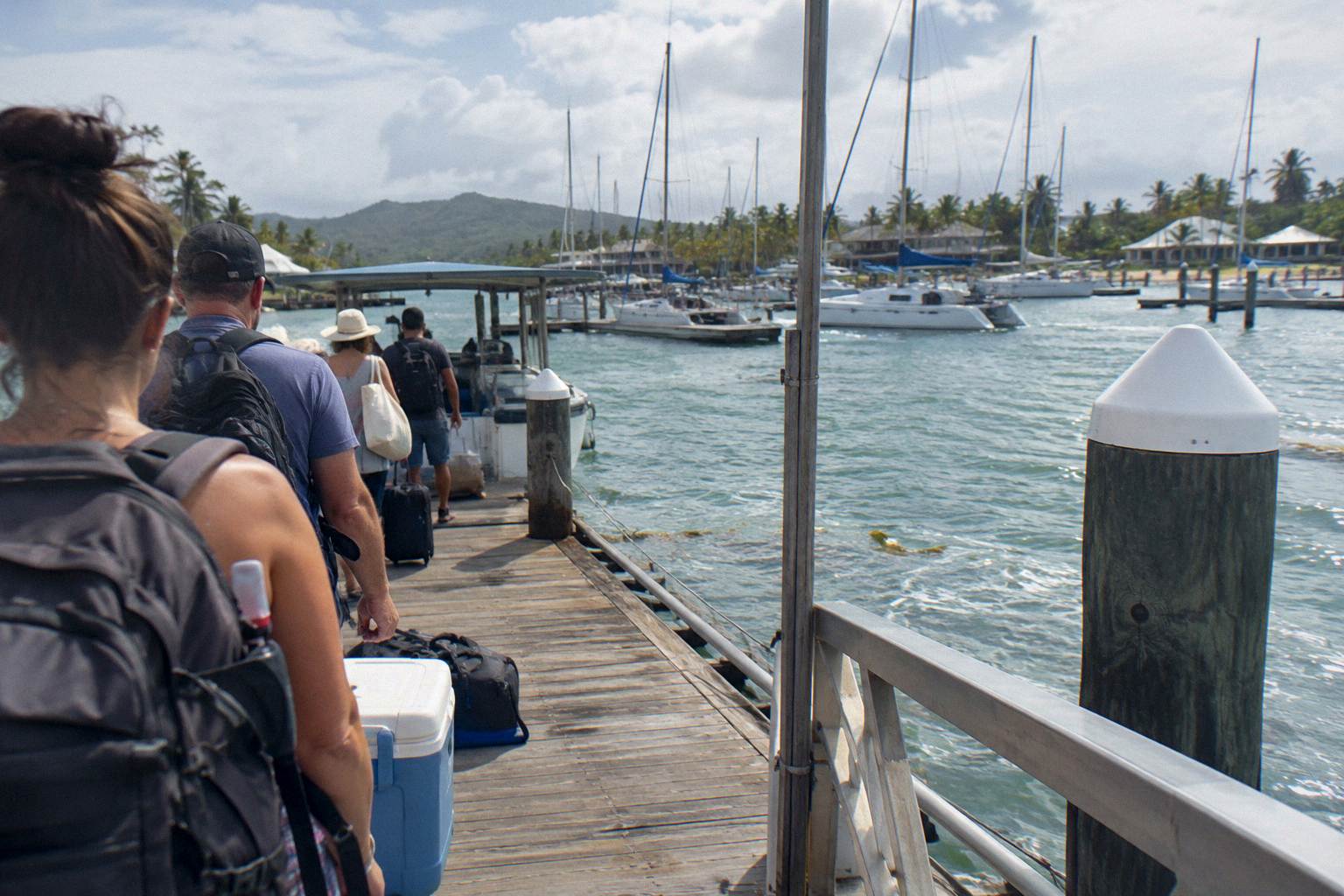
A workable timeline looks like this. When you book, you are betting on the climate averages and the season, and you accept that the booking page's 24-hour free cancellation is your escape hatch. Five days out, glance at the extended forecast for the Mamanucas: if a tropical system or a sustained wind event appears, that is the moment to consider amending to another date, which carries no fee. Two days out, reconfirm the booking with the Port Denarau office as the operator requests and ask directly about conditions. On the day, the 9.30am full day departure gives you the full schedule; the midday half day departure gives the forecast six more hours to declare itself before you commit.
| Forecast situation | What it usually means | Sensible move |
|---|---|---|
| Scattered showers, light wind | Short bursts of rain, fine in between | Go as planned |
| Sustained rain, light wind | Wet day but calm crossing | Decide how much a pool day in showers is worth to you |
| Strong wind warning | Lumpy crossing, possible disruption | Consider amending to another date, no fee |
| Tropical disturbance or cyclone watch | Services subject to cancellation | Amend early; operator liability is an alternative cruise or refund |
| Clear and calm, any month | Textbook beach club day | Go, and reapply sunscreen |
Wind deserves one more sentence because it is the most underestimated factor. The Mamanucas sit in the trade wind belt, and the dry season brings the steadier south-easterly trades, which keep temperatures and humidity pleasant but can freshen the afternoon sea. The wet season is often calmer between systems, hotter and more humid. Neither pattern cancels trips on its own; the island, at roughly 0.046 square kilometres according to third-party geographic records, is small, low and a short crossing from Port Denarau, which keeps the route viable in conditions that would ground longer open-water sailings.
Matching The Season To Your Pass Choice
The season you travel in should decide your pass: in the drier months, a full day format gives you the complete island at a relaxed pace, and the longer Rosie Holidays option, about 9 hours total with roughly 7 on the island, maximises a reliable weather day, while in the wetter months the 5-hour half day limits exposure to the more volatile half of the day, and the free amendment rule lets you shift if the morning turns poor.
Work through the logic by product. The Half Day Pass leaves Port Denarau at 12.00pm and returns on the 4.45pm or 6.00pm sailing, which puts your entire visit in the afternoon. In March, when the averages show 22 rain days, an afternoon-only visit carries more statistical risk than a morning arrival, but in June the same structure barely matters because the whole day trends dry. The half day also suits travellers using it as a weather hedge: a shorter commitment is easier to write off mentally if a squall passes through.
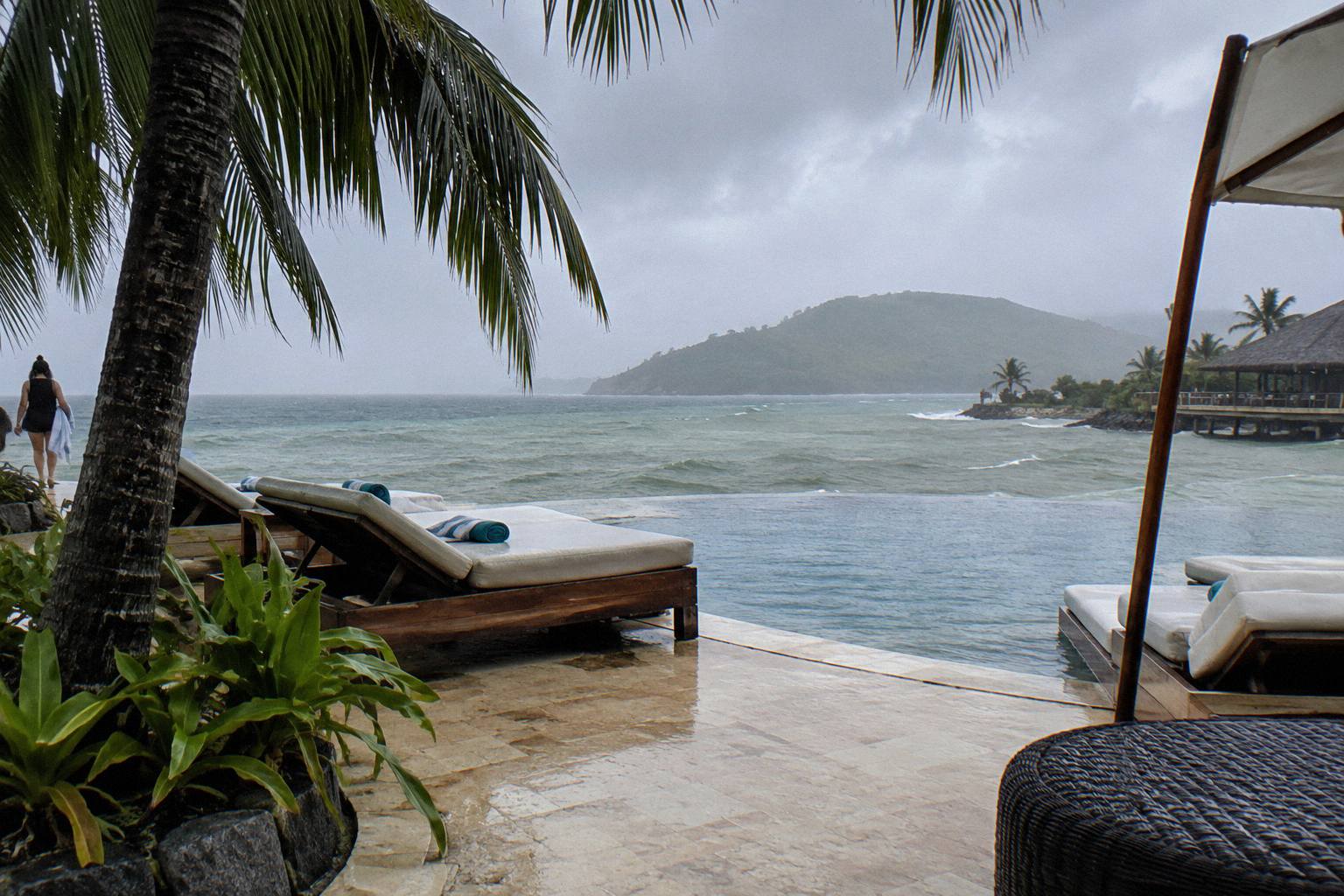
The full day options invert that calculation. Arriving at 10.00am on the South Sea Cruises departure means you bank the morning hours, statistically the more stable part of a tropical day, before afternoon convection has a chance to build. The Rosie Holidays Full Day, 9 Hours, from USD 106 per person, stretches that to about 7 hours on the island following a 25-minute catamaran cruise, with pickup and return included. On a dry-season day that extra time is pure value; on a wet-season day with a 2pm downpour, it is an hour spent under cover with a cocktail deal and the infinity pool in the rain, which some travellers genuinely enjoy and others count as wasted.
Then there is the format that ignores most of this discussion. The Helicopter Day Trip from Heli-Tours Fiji, from USD 543.69 per person, flies you out from the helipad at Port Denarau with a boat return and no hotel pickup, in a 6-hour format. Weather still governs it, low cloud and wind ground helicopters faster than catamarans stop sailing, but the crossing exposure shrinks to minutes. For a traveller with one fixed date inside the wet season and a budget that reaches that far, it is a different way of buying weather resilience rather than a better or worse product.
Price-wise, remember that all four products carry free cancellation up to 24 hours before travel on the booking page, and a mandatory fuel surcharge of FJ$10 per adult and per child applies from 3 November 2026 until further notice on the operator side. Neither the season nor the pass type changes those two rules, so you can compare passes on duration and format alone and handle timing separately. The day pass prices guide breaks the money side down product by product.
Mistakes That Trip People Up
The recurring weather mistakes are booking the wrong window for your priorities, treating rain days as all-day rain, ignoring UV in the cooler months, cancelling inside 24 hours during a mere forecast, and forgetting the fuel surcharge and the reconfirmation step. Every one of these is avoidable with a calendar, the forecast in the final week, and the amendment rule. None of them requires luck with the weather.
The costliest mistake is timing. Travellers cancel on their own inside the 24-hour window because a forecast looks grey, pay 100 percent, and then watch the day turn out fine, since tropical showers rarely own a whole day. The amendment rule exists for exactly this situation: moving to another date or another South Sea Cruises day trip carries no fee. The mirror-image mistake is ignoring a wind warning and being surprised by a rough crossing; the sailing is short, but short and lumpy is still lumpy for a sensitive passenger. The third is sun complacency in July, when 27-degree air and a UV index of 7 still burn pale skin over a six or seven hour island day. The fourth is assuming the averages are a forecast: they are long-term climate averages, and any individual date can depart from them in either direction.
A short checklist before you pay: confirm your dates sit in the season you actually want, check whether school holidays overlap them, note the 24-hour free cancellation deadline in your own calendar, plan to reconfirm the day before through the Port Denarau office, and pack sun protection regardless of month. If you want the full packing rundown, the what to bring to Malamala Island guide covers the operator's official list. Do that sequence and the weather becomes a variable you manage rather than a gamble you took.
The Bottom Line On Timing Your Trip
For the best odds of a textbook beach club day, travel between May and October, with May and October as the smart shoulder picks, and book a full day format so you own the morning. For warmer sea and fewer crowds, November to April works if you hold your dates loosely and accept the cyclone-season tail risk. In every month the sea is warm, the UV is serious, and the rules stay the same.
Put plainly, the weather rarely decides whether you should go to Malamala Beach Club; it decides how you book. Dry-season travellers book early and stay long. Wet-season travellers book with flexibility, watch the wind forecast rather than the rain forecast, and treat a passing squall as part of the day rather than the end of it. The island is the same in both windows, and as the planning home for this destination, Malamala Fiji keeps the pass details, comparisons and timing guides in one place. Choose your window, use the escape hatches the terms give you, and let the averages do the long-range worrying on your behalf.
Common Questions About Malamala Island Weather
What Is The Best Month To Visit Malamala Island?
By the climate averages, July is the driest month at 66 mm of rain, with June close behind at 74 mm. May, June, July and August form the driest block of the year. May and October are strong shoulder picks with 91 and 100 mm respectively, fewer crowds, and sea temperatures still at 27 to 28 degrees. The wettest month is March at 312 mm.
Does It Rain All Day In Fiji's Wet Season?
Usually not. The climate averages count rain days, and even in the wettest months tropical rain often arrives as heavy, short bursts, frequently in the afternoon, with bright periods between them. A full day of continuous rain is possible but not the typical pattern. The averages describe long-term odds, not what your specific date will do, so check the forecast in the week before travel.
When Is Cyclone Season For The Mamanuca Islands?
Roughly November to April, as general guidance rather than an official quoted window. Direct strikes on any given week are uncommon, but the possibility of a named system disrupting travel is real in these months, and the operator's terms recommend travel insurance. If you travel in this window, keep your dates flexible and know the amendment rules before you book.
Is The Sea Warm Enough To Swim All Year At Malamala Beach Club?
Yes, by the climate averages the sea sits between 26 and 29 degrees in every month. The coolest water, 26 degrees, falls in July, August and September; the warmest, 29 degrees, runs from January to April. All included water activities, including snorkelling, kayaks and paddle boards, stay comfortable year round without a wetsuit.
What Happens If Bad Weather Cancels My Malamala Day Trip?
All services are subject to sea and weather, and under the published terms the operator's liability is limited to an alternative cruise or a refund of the fare. That is separate from cancelling yourself: free cancellation applies up to 24 hours before travel on the booking page, inside 24 hours the fare is 100 percent, and amending to another South Sea Cruises day trip or date carries no fee.
How Strong Is The Sun On Malamala Island?
Very strong for most of the year. The maximum UV index reaches 11, the top of the standard scale, in most months, and eases only to 7 to 9 in the cooler dry months. Unprotected skin can burn quickly at midday. Bring sunscreen, a hat and sunglasses, use shade through the middle hours, and note the island's shop sells all three if you forget.
Keep Reading
These are the three follow-up reads that answer the questions timing raises next: how long to stay once you have picked your month, how the Port Denarau departure actually works, and what to pack for a day of serious sun. Each guide stands alone, and each one picks up exactly where the weather decision leaves off.
- Half day or full day on Malamala Island if the season has you reconsidering how long to stay.
- How to get to Malamala Island for the Port Denarau departures, coach connections and crossing details.
- What to bring to Malamala Island for the operator's official packing list, sun protection included.