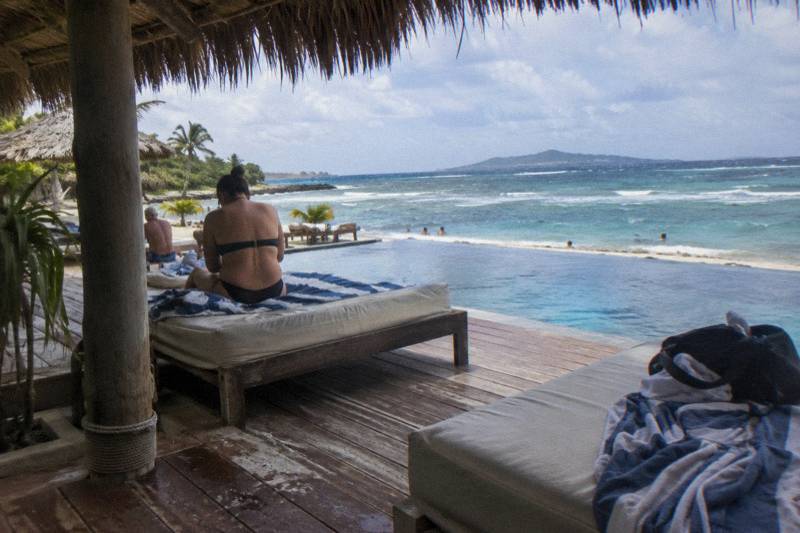
What To Bring To Malamala Island: Towels, Sun Cover, Cash And Food
Towel service is already included in every Malamala Beach Club day pass, so the towel question answers itself. What you actually need to think about is your card, your sun cover and the food rules.
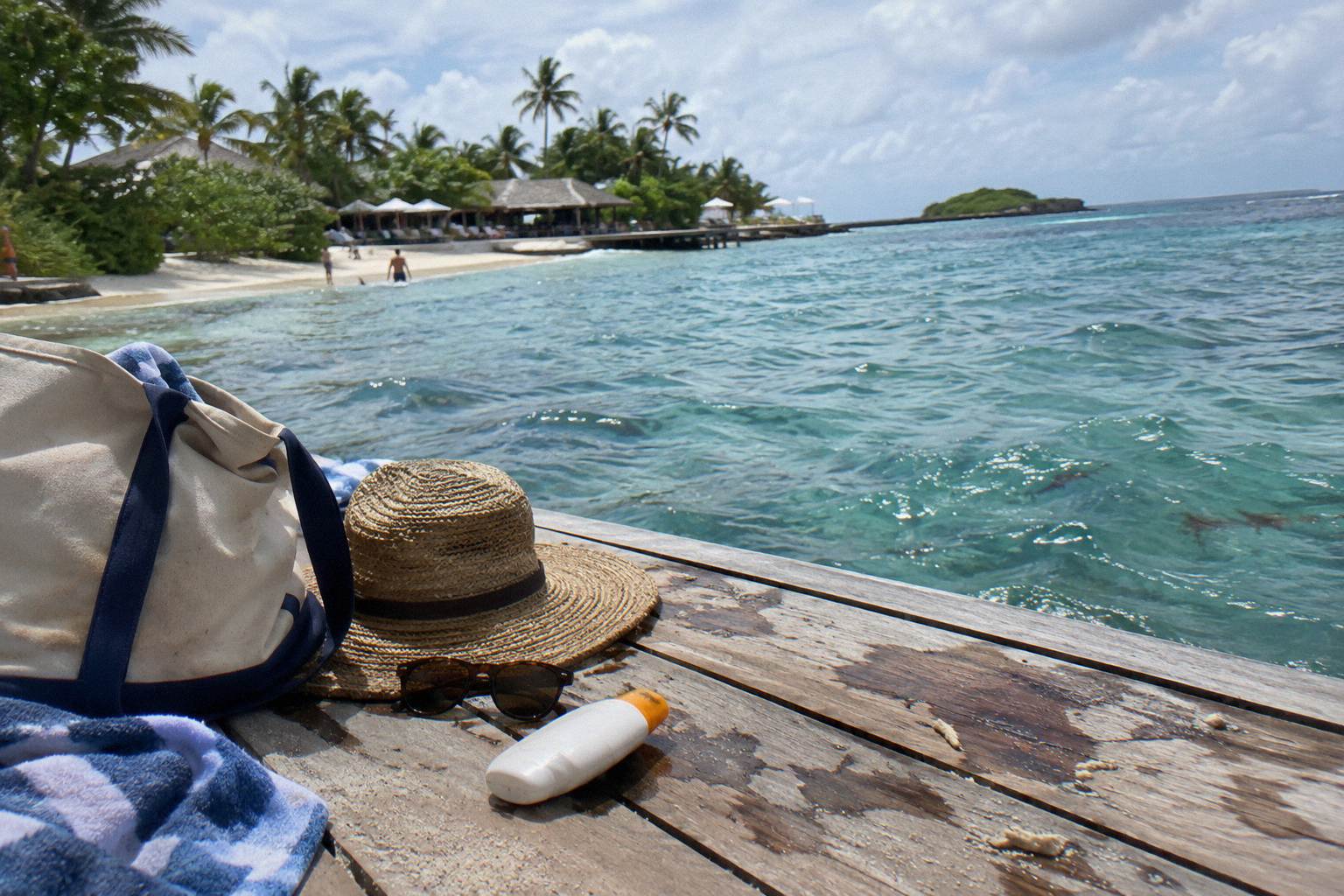
Short answer
No, you do not need a towel: towel service is included with every Malamala Beach Club day pass. Bring swimwear, a hat and sunscreen, footwear for the beach, and a credit or debit card for food, drinks, merchandise and massage. Outside food and drink are not permitted except snacks for young children, and everything you consume on the island goes on a TAB card settled at departure.
Packing for Malamala Island trips people up because the island is neither a bareboat beach nor a resort you are staying at. It is a beach club on its own island in the Mamanuca group, about 30 minutes by high-speed catamaran from Port Denarau, and the rules sit somewhere between a day spa and a boat trip. Some things are handed to you on arrival, some things must be bought on the island, and one thing people always pack, the beach towel, is genuinely not needed.
The official advice from the operator is short: bring a card for food, drinks, merchandise and massage, swimwear, sunscreen and a hat, and footwear for the beach. Everything else in this guide comes from unpacking what that actually means in practice, from the TAB card system that replaces cash on the island to the fuel surcharge that is now charged alongside every pass. If you want the short version first, the next section gives it in four sentences.
In Short: The Quick Answer
You do not need a towel, towel service is included with every pass. You do need swimwear, a hat, sunscreen and beach footwear, plus a card for the TAB system. Do not pack food or alcohol: outside food and drink are not permitted except snacks for young children. Leave the drone at home unless you have contacted the club first.
That is the whole packing decision in one box. The rest of this guide explains each line, starting with the towel question that brings most people here, then the eat and drink rules, then the money system, then the odd items like drones and luggage that have their own conditions. If you are still choosing between passes, the full day trip carries the most reviews, and the South Sea Cruises full day tour departs Port Denarau at 9.30am with return coach transfers included, which shapes what you carry: you are out for 6 to 7 hours, so pack for a full day, not a beach stop.
For background on the island itself, see the Malamala Island map and layout guide, which explains where the pool, cabanas, restaurant and adults-only Venue sit, useful for deciding whether you need walking shoes or flip flops for the day.
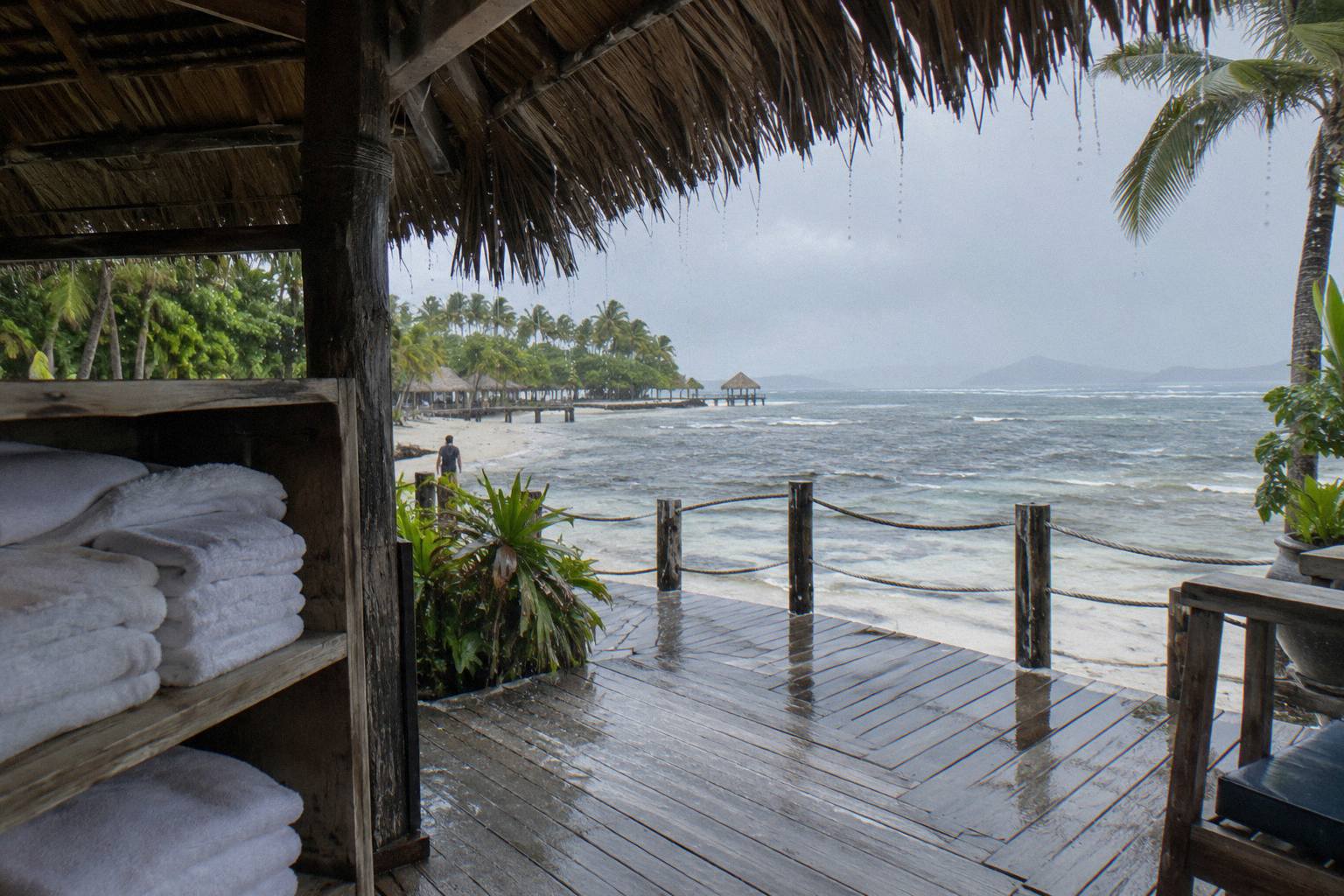
Do You Need A Towel For Malamala Beach Club?
No, towel service is included with the day pass, so packing your own towel is optional. The inclusion covers drying off after the infinity pool, the sea or the included snorkel gear. A travel towel still earns its place if you want something for the catamaran ride home, or if your hotel pool rules make you cautious about borrowed towels. But the honest answer is that the island has you covered.
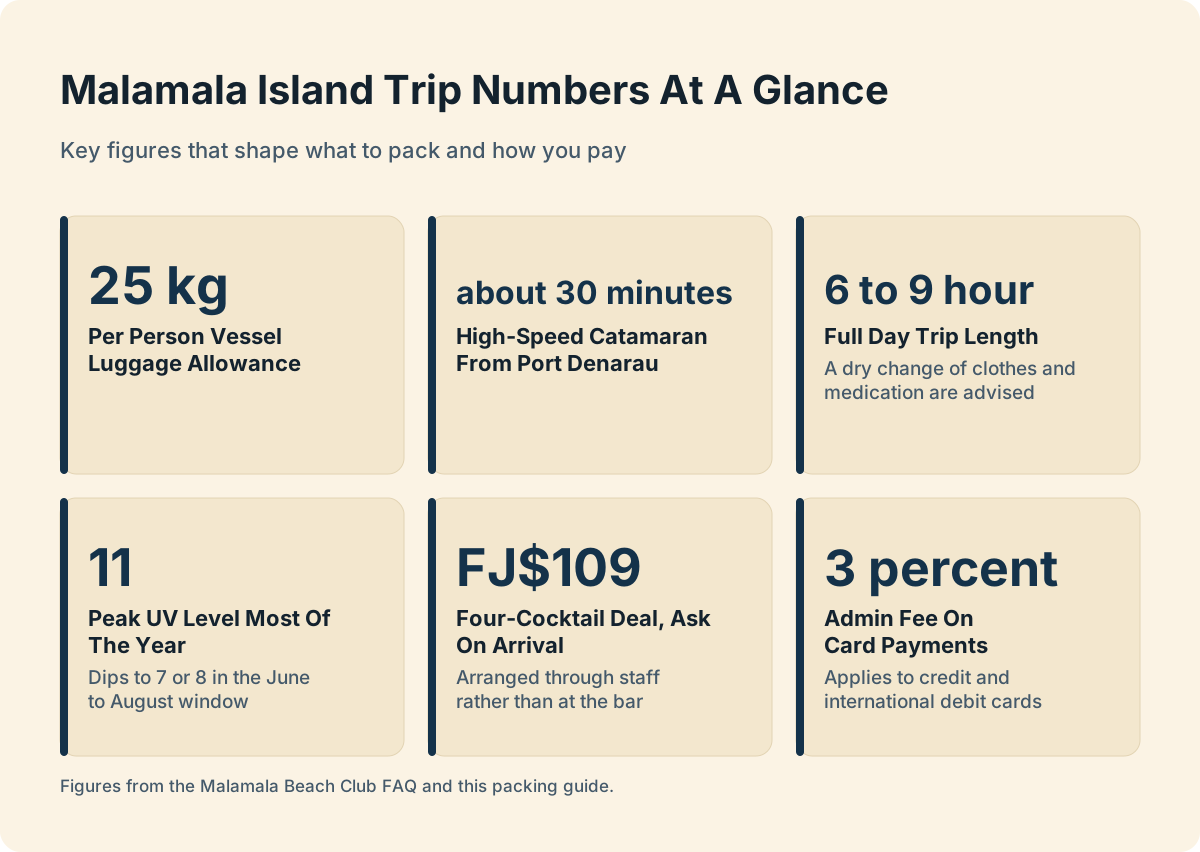
The inclusion list on the official beach club FAQ page names towel service alongside return coach transfers, the return catamaran, complimentary WiFi at the central facility, and the non-motorised gear: snorkel equipment, kayaks and paddle boards. That is a generous list for a day trip, and the towel is the item people most often duplicate. On a boat with a 25 kg luggage allowance per full-fare customer, a bulky bath towel is dead weight.
- South Sea Cruises Full DayUS$96
- Rosie Holidays Full Day, 9 HoursUS$106
- Helicopter Day TripUS$543.69
One practical note: the towel is for use on the island. If you are combining the trip with other stops on your holiday, a quick-dry towel in your day bag is still sensible travel kit. It just is not something Malamala Island requires of you. The same logic applies to snorkel gear, which is included, so a mask and fins only need to come with you if you own a set you strongly prefer, or if you need a prescription lens the island's stock does not cover, in which case check with the club ahead of your date.
If you are weighing whether the shorter option suits you better, the Half Day Pass departs Port Denarau at 12.00pm and returns with the same inclusions, towel service included, over roughly 5 hours. Less time on the island means a lighter pack, not a different one. The half day versus full day question is covered in more depth in the Malamala Island half day or full day guide, which includes the timing trade-offs for families and cruise-ship visitors.
The Full Pack List, Item By Item
The core list is five items: swimwear, sunscreen, a hat, beach footwear and a credit or debit card. Add sunglasses, a dry change of clothes for the boat home, and any medication you take during a 6 to 9 hour day. Snacks for young children are explicitly allowed, everything else edible stays ashore. Pack light enough that your bag fits the 25 kg per person vessel allowance without thought.
Here is the pack list as a table, with the reason each item earns its space. The operator's own bring list is the source for the first five rows, and the rest follows from the island's published conditions.
| Item | Bring it? | Why |
|---|---|---|
| Beach towel | Optional | Towel service is included with the pass |
| Swimwear | Yes, worn or packed | Pool, sea, kayaks and paddle boards are the main draw |
| Sunscreen | Yes | UV reaches 11, the top of the scale, across most of the year in the Mamanucas |
| Hat | Yes | Shade on the beach side is limited to cabanas; the operator lists a hat on its bring list |
| Sunglasses | Yes | Reflected glare off the lagoon and pool all day |
| Beach footwear | Yes | Sand, hot decks and reef edges underfoot |
| Credit or debit card | Yes | Food, drinks, merchandise and massage all go on the island TAB card |
| Dry change of clothes | Sensible | The catamaran ride home is air-conditioned and often breezy |
| Medication | Yes | A full day away from your hotel; nothing is available on the island beyond the merchandise shop's sunscreen, hats and sunglasses |
| Snacks for young children | Allowed | The only outside food the conditions permit |
| Outside food or alcohol | No | Not permitted, except those child snacks |
| Drone | Only with prior contact | The club asks you to make contact before arrival, and Fiji aviation rules apply |
Two rows deserve a paragraph each. The sunscreen row is not a formality: the Mamanuca climate averages show maximum UV of 11 in most months, dipping only to 7 or 8 in the June to August window. A hat, sunscreen and reapplication discipline matter more here than almost anywhere else in the packing decision, and the merchandise shop does sell sunscreen, hats and sunglasses, so a forgotten item is fixable at a price. Note that no official reef-safe sunscreen rule has been published, so this guide does not claim one, though reef-conscious sunscreen is simply good practice around coral planting programmes like the island's.
The footwear row surprises people. The island is small, roughly a 20 minute walk around, but that walk crosses sand, timber decks and broken reef edges, and the operator explicitly lists footwear for the beach on its bring list. Flip flops are enough for most visitors. Water shoes are the better call if you plan to snorkel from the beach rather than the designated areas, since coral underfoot is sharp.
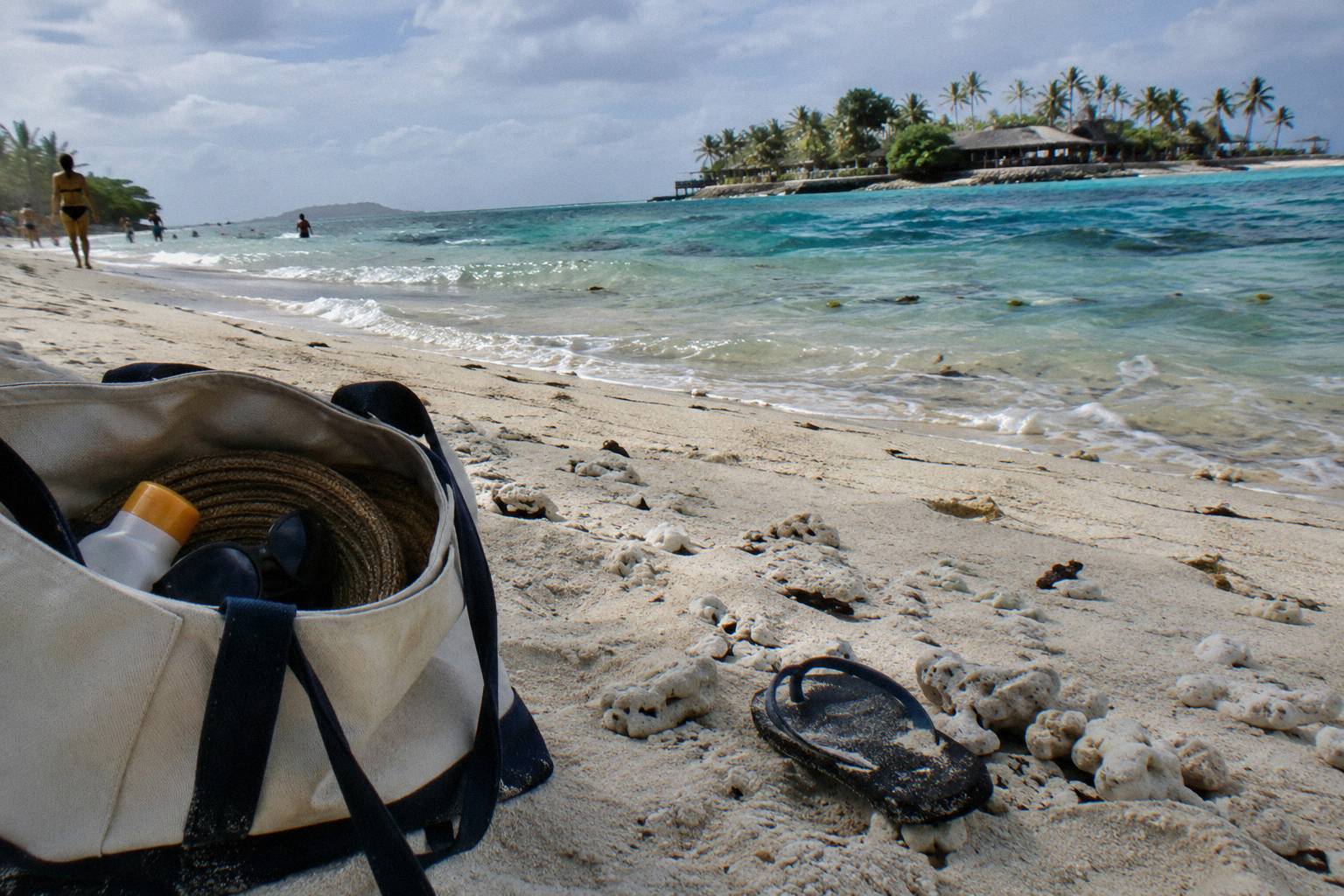
If your date and budget are still open, these are the three passes this site covers, and the pack list above serves all three.
Eat And Drink Rules: What You Can Bring, What You Cannot
Outside food and beverages are not permitted on the island, with one exception: food and snacks for young children. Food and drinks are not included in any day pass, they go onto a TAB card opened for you on arrival, and the tab is settled at departure by cash, debit or credit. On the boat, only alcohol sold by the vessel crew may be consumed on board.
The TAB system is the piece of Malamala logistics that catches the most visitors out. You do not pay as you go on the island. Instead, charges from the restaurant, the bars, the merchandise shop and the massage bures accumulate against your name, and the whole balance is settled when you check out for the return catamaran. Cash is accepted at that settlement, so cash is not useless, but carrying it through the day is unnecessary and carrying enough for a full day of island prices is unwise. One card in a dry bag covers it.
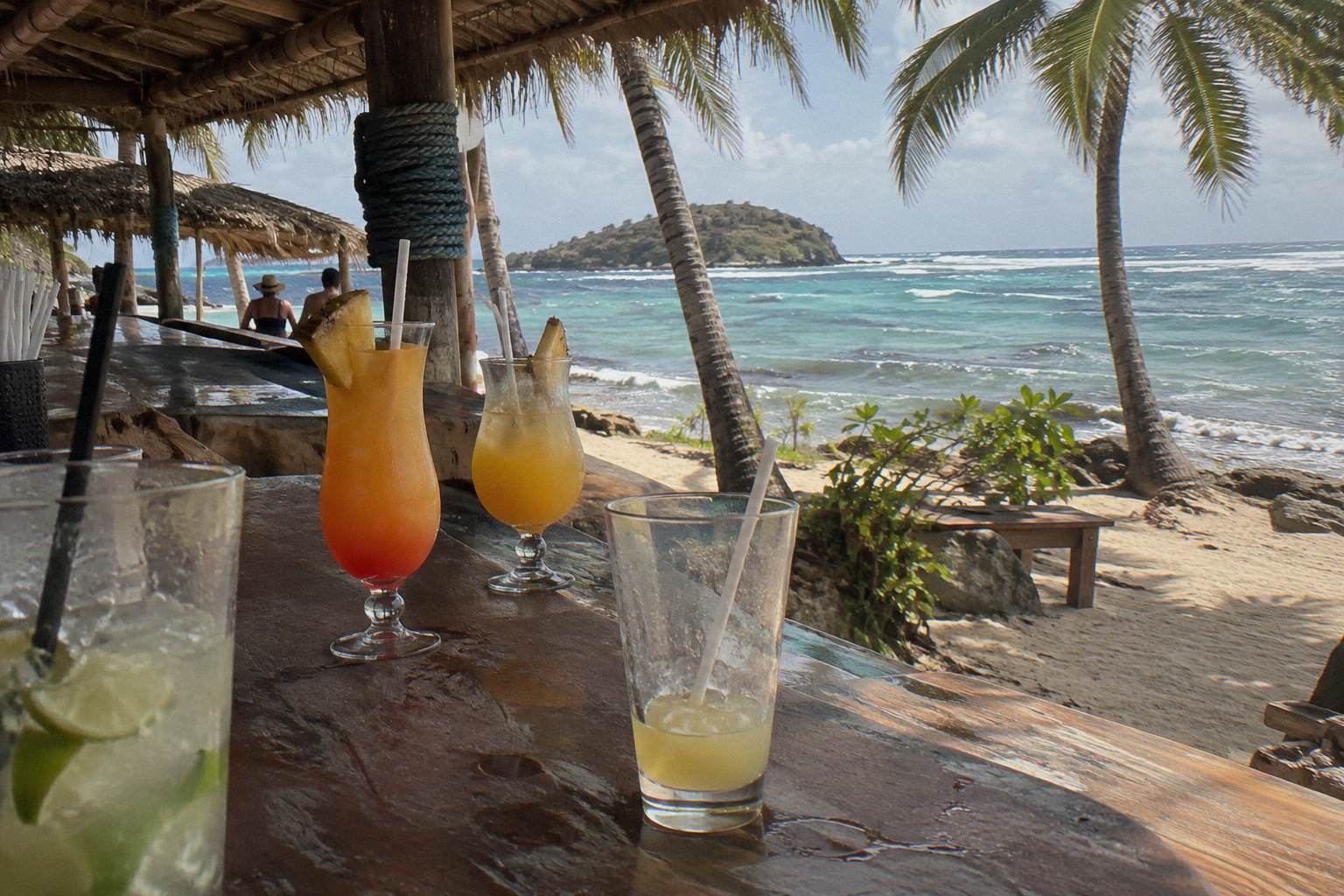
The drink rules are worth knowing before you board rather than after. Alcohol from your own bag cannot be drunk on the vessel, full stop; that is a condition of carriage, not a suggestion. On the island, the bars are the only source, and the deal worth knowing about is the cocktail offer: four cocktails for FJ$109, available if you ask on arrival. Ask early, because the offer is arranged through the staff rather than printed on a menu you will find by yourself.
| Situation | Allowed? | What happens instead |
|---|---|---|
| Bottled water from your hotel | Not permitted | Water is available through the island's facilities; bring an empty attitude rather than a full bottle |
| Snacks for young children | Permitted | The stated exception in the island's conditions |
| Your own beer or wine | Not on the vessel, not on the island | Only alcohol sold by the vessel crew may be consumed on board |
| Lunch from the restaurant | Bought on island | Charged to your TAB card |
| Four-cocktail deal | Bought on island | FJ$109, ask on arrival |
| Coffee and soft drinks | Bought on island | Charged to your TAB card |
Menu items and their prices are not something this guide can verify, so none are printed here. What is verifiable is the structure: you eat and drink on the island's account and pay once at the end, and the 3 percent admin fee on credit and international debit cards applies to that settlement under the island's published terms. Factor that into whether you settle by card or cash.
What Is Included Versus What You Buy
Included with the pass: return coach transfers from most major hotel areas, the return catamaran, towel service, complimentary WiFi at the central facility, and non-motorised gear including snorkel equipment, kayaks and paddle boards. Bought on the island: all food and drinks, merchandise, massage, and upgrades like poolside day beds, beachside cabanas and the Grand Cabanas. Flotation devices are available for non-swimmers.
This split is where Malamala behaves more like an all-inclusive-lite resort than a beach. The pass itself covers movement and floating: you get there, you swim, you paddle, you dry off, you get home. Everything you consume or book on top, from lunch to a massage bure to a cabana with butler service, is a separate charge to your TAB card. The upgrade prices are published on the official price page: a Poolside Day Bed for one or two people at FJ$99, a Beachside Cabana with butler service at FJ$139, and the Grand Cabana tier at FJ$329 for three to twelve people.
| Category | Included with the pass | Paid on island (TAB card) |
|---|---|---|
| Getting there | Return coach from most Nadi, Denarau, Wailoaloa, Vuda, Coral Coast and Natadola area hotels; return catamaran | Fuel surcharge FJ$10 per adult and per child, from 3 November 2026 until further notice |
| On the water | Snorkel gear, kayaks, paddle boards, flotation devices | Motorised and boat-based activities where offered |
| Comfort | Towel service, WiFi at the central facility, pool and beach club facilities | Day beds, cabanas, massage bures |
| Food and drink | Nothing | All meals, drinks, the four-cocktail deal |
| Extras | The Venue adults-only area at no extra cost unless privately booked | Merchandise, sunscreen, hats, sunglasses from the shop |
The cabana question is the one to settle before you arrive rather than on the pier. A beachside cabana at FJ$139 with butler service changes the shape of your day, and the Grand Cabanas suit groups, but they are booked through the island, so deciding at the gate means deciding with less information. If your date is flexible and your group is three or more, look at the cabana pricing on the operator's price page before you travel rather than after you land on the sand.
For a comparison of the two land-based operators selling the same island, the Rosie Holidays full day, 9 hours from USD 106 per person gives you about 7 hours on the island with pickup and return included, against the South Sea Cruises schedule's 6 to 7 hour day. The inclusions on the island itself, towels, gear, WiFi, are identical whoever sells you the seat.
Money, Cards And The Fuel Surcharge
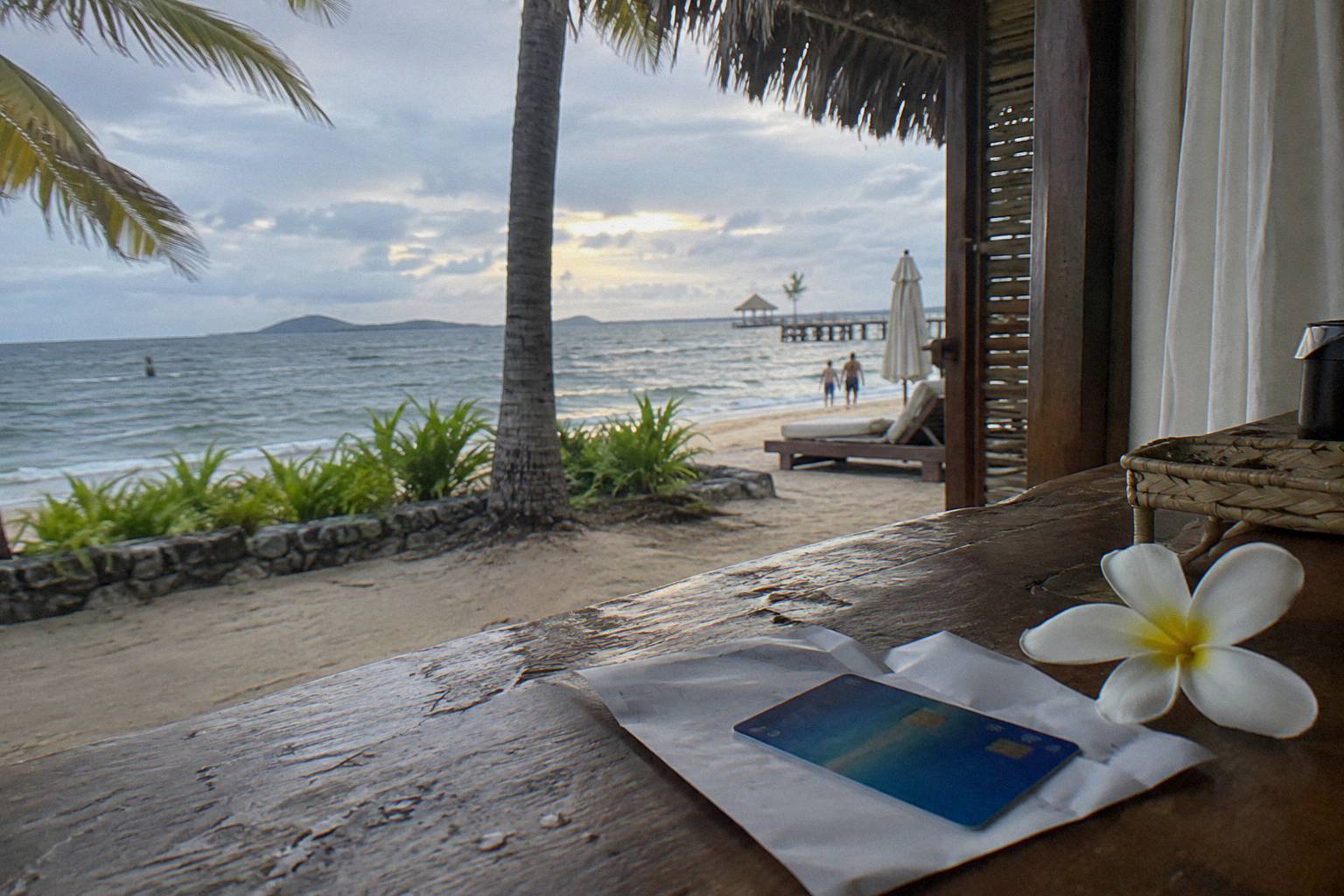
Bring one card and a modest amount of cash if it reassures you, nothing more. The TAB card settles at departure by cash, debit or credit, and a 3 percent admin fee applies to credit and international debit cards under the published terms. Cash avoids that fee but still has to be carried all day. The FJ$10 per person fuel surcharge is part of your budget maths from 3 November 2026.
The card fee is small but predictable, and knowing it exists removes the end-of-day surprise. If your card is a Visa, Mastercard or Amex issued outside Fiji, the 3 percent applies; if you settle in cash, it does not. Since you settle once, the decision is a single calculation at the departure desk, not something you need to manage all day. Put the card in a dry bag or the zip pocket of your day pack and forget about it until the boat home.

The fuel surcharge deserves its own sentence because it is mandatory and recent. From 3 November 2026 until further notice, FJ$10 per adult and FJ$10 per child applies on top of the pass price. Whether you book the South Sea Cruises full day from USD 96 per person or the Rosie Holidays pass from USD 106 per person, the surcharge is an island-level charge, so budget it into the total rather than discovering it at check-in. Child pricing is straightforward here in one respect: prices apply to everyone aged 3 and over, and infants 2 and under travel complimentary.
One more money note: tipping is not customary in Fiji, so the end-of-day settlement is the whole financial event. There is no wallet-watching to do between arrival and departure beyond what you consciously order, which is the quiet luxury of the TAB system. If you are prone to losing track, photograph your TAB docket each time you sign one, a habit that turns the departure desk into a two-minute stop.
Footwear, Sun Cover And Beach Kit
Beach footwear is on the official bring list because the island mixes sand, timber decking and reef edges. Sun cover is the other non-negotiable: the Mamanuca climate averages put maximum UV at 11 in most months, with sea temperatures of 26 to 29 degrees Celsius year round. A hat, sunscreen, sunglasses and a rash shirt for long snorkel sessions cover the sun problem completely.
The climate table is worth reading before you pick a month, because it tells you what your skin is up against. These are climate averages from a third-party aggregator, not a forecast, but the pattern is clear and consistent.
| Month | Max temp (C) | Rain (mm) | Rain days | Sea temp (C) | Max UV |
|---|---|---|---|---|---|
| January | 31 | 269 | 18 | 29 | 11 |
| March | 30 | 312 | 22 | 29 | 11 |
| May | 29 | 91 | 19 | 28 | 8 |
| July | 27 | 66 | 18 | 26 | 7 |
| September | 28 | 81 | 17 | 26 | 11 |
| November | 30 | 124 | 17 | 28 | 11 |
The wetter November to April window and the drier May to October window do not change the pack list much, they change how seriously you take it. In the dry months, UV still peaks at 7 to 11, so the hat and sunscreen stay. In the wet months, a light dry-bag liner for your phone and card is the cheap upgrade that earns its space, since a tropical downpour can arrive fast even on an otherwise beachy day. For the full month-by-month picture, see the Malamala Island weather and best time guide.
Kit worth considering beyond the basics: a dry bag for the boat, reef-safe sunscreen as personal practice even though no official rule requires it, a rash shirt for snorkelling, and a waterproof phone pouch. Leave behind the beach umbrella and the snorkel fins, the first is dead weight and the second are included. Flotation devices are available for non-swimmers, so armbands and pool noodles can stay home too.
If the half day format suits a sun-sensitive group better, less midday exposure over roughly 5 hours, the same logic applies with a smaller bag.
Drones, Luggage And Other Special Items
Drones require prior contact with the club before arrival, and Fiji aviation rules apply once you fly. Luggage is capped at 25 kg free per full-fare customer on the operator's vessels, though a day trip should never approach that. No verified information exists about lockers or ATMs on the island, so plan as if neither is there: carry only what you can keep with you at a beach club.
The drone rule is the clearest of the special items: the island's terms ask you to make contact before you arrive, and the aircraft must then follow Fiji's aviation regulations. That is a pre-trip email, not a gate-side negotiation, and the club's contact address is published on its terms page. If aerial footage of the Mamanucas is a genuine goal, that conversation happens before you pack, because an unannounced drone can simply stay in the bag.
Everything else on the special-items list resolves to "leave it ashore". No outside alcohol on the vessel. No food beyond child snacks. No need for a laptop, since WiFi is complimentary at the central facility but this is not a work day. Jewellery and valuables are better in the hotel safe than a beach bag. And travel insurance, which the island's own terms recommend, is arguably the single most valuable thing you can "bring", since all services are subject to sea and weather and the operator's liability in a cancellation is limited to an alternative cruise or a refund of the fare.
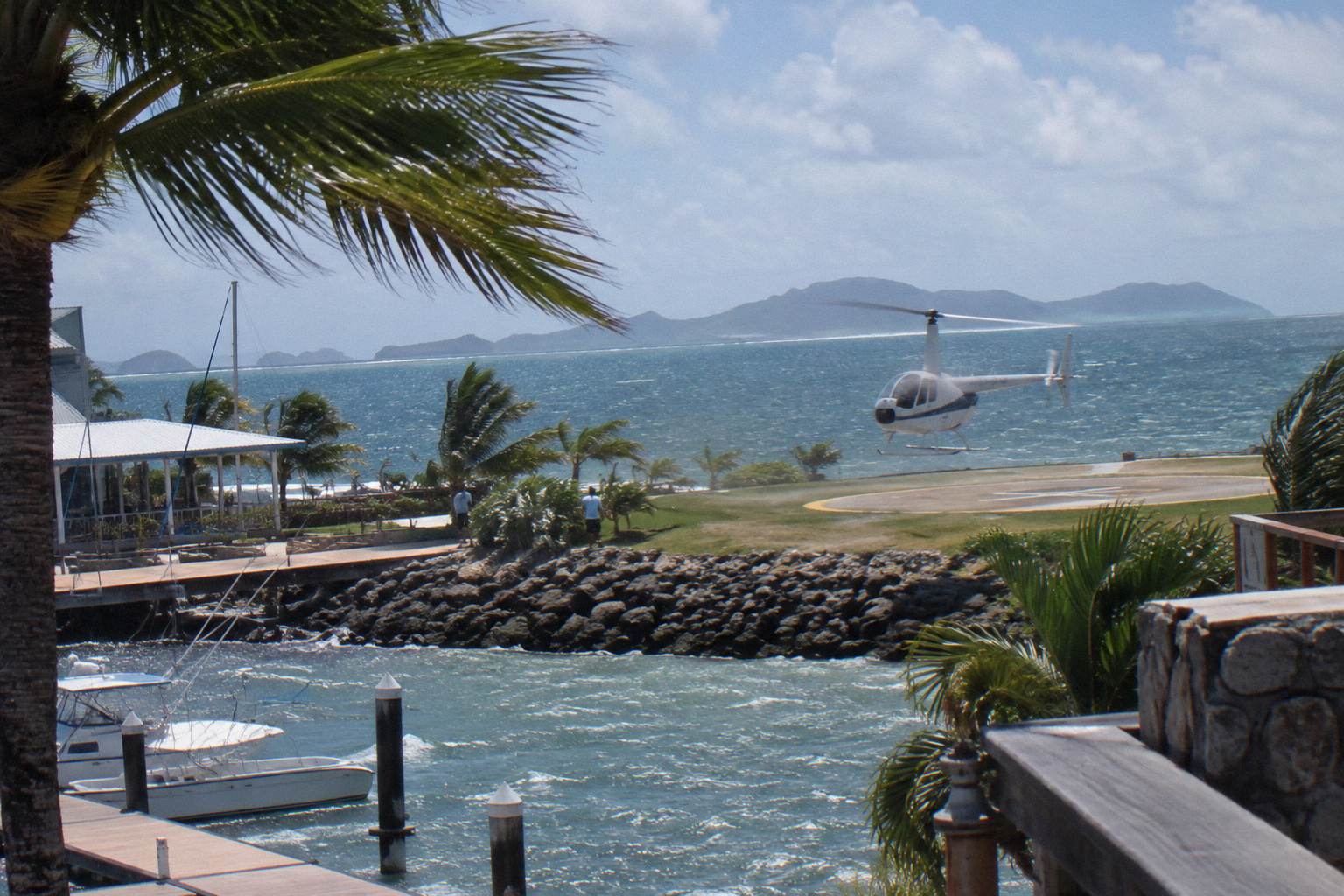
The one pass that changes the pack list structurally is the helicopter option, from USD 543.69 per person, which flies you out from the Heli-Tours Fiji helipad at Port Denarau and returns you by boat. Loose hats and unrestrained bags matter more in a helicopter cabin than on a catamaran deck, so if that format appeals, pack tight and pack soft.
What Trips People Up: Common Packing Mistakes
The four mistakes that repeat are packing a towel that is already included, arriving with no card because the island "takes cash", bringing a picnic that cannot come ashore, and underestimating the sun because the sea breeze hides it. Each one is avoidable with a ten-minute packing check the night before. None of them are catastrophic, all of them cost money or comfort.
The towel mistake is harmless but bulky. The card mistake is the expensive one: yes, cash is accepted at settlement, but a visitor who assumes card-only-elsewhere logic and carries a thick wallet of notes through a beach day has created a problem the TAB system was designed to avoid. The picnic mistake splits into two versions, the family version, where child snacks are fine, and the adult version, where a cooler bag of drinks stays on the boat or stays ashore.
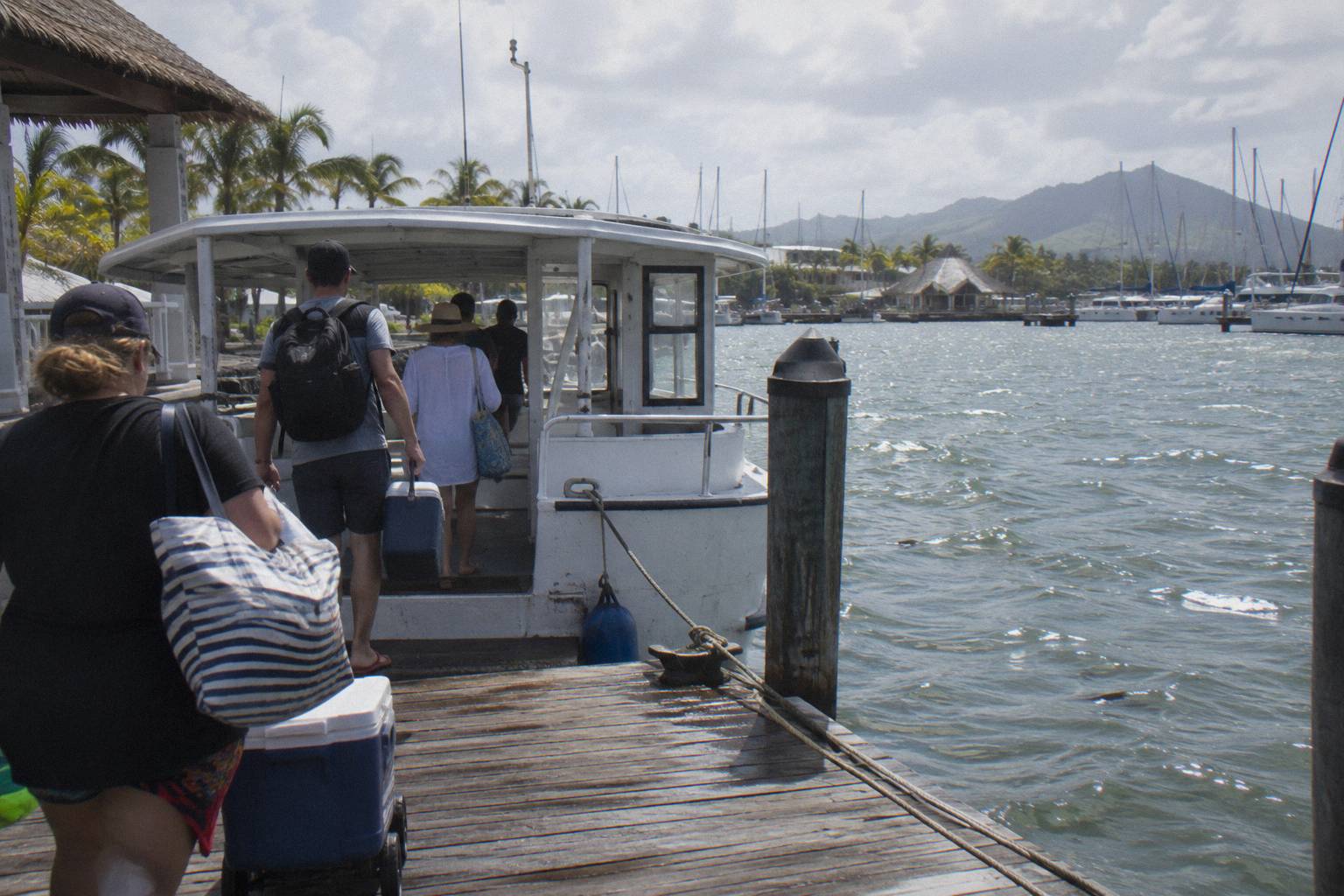
The sun mistake is the quiet one. A 27 degree July day with a steady breeze feels temperate, and the UV index is still 7, high enough to burn an unprotected snorkeller in well under an hour. The climate averages back this up across every month of the year. Reapply after the water, wear the hat you packed, and use the rash shirt if you are pale and planning a long session with the included kayaks or paddle boards.
A final mistake is packing for the wrong duration. The full day options put you on the island for 6 to 9 hours depending on the operator, which is a full sun cycle, a meal and probably two swims. The half day compresses that. Match the bag to the pass, and when in doubt, lighter is better, because between the included gear, the towel service and the merchandise shop, the island covers most gaps at a price.
For everything beyond packing, Malamala Fiji covers the passes, prices, routes and comparisons in the rest of this site's guides, including how to get to the island and how the day trip stacks up against other Mamanuca options.
If you are ready to lock in a date, these are the three passes this guide has been packing for.
Common Questions About What To Bring To Malamala Island
Do You Need A Towel For Malamala Beach Club?
No. Towel service is included with every Malamala Beach Club day pass, covering the pool, the sea and the included snorkel gear. A travel towel is only worth packing if you want one for the catamaran ride home.
Can You Bring Your Own Food And Drinks To Malamala Island?
Outside food and beverages are not permitted, with one exception: food and snacks for young children. All other food and drinks are bought on the island and charged to a TAB card settled at departure by cash, debit or credit. On the vessel, only alcohol sold by the crew may be consumed on board.
Do You Need Cash On Malamala Island?
Not during the day. Everything goes on a TAB card and is settled once at departure, where cash, debit and credit are all accepted. A 3 percent admin fee applies to credit and international debit cards under the published terms, so cash avoids that fee.
Is Snorkel Gear Included Or Should You Bring Your Own?
Snorkel gear is included with the pass, along with kayaks, paddle boards and flotation devices for non-swimmers. Bring your own mask only if you have a prescription lens or a strongly preferred fit, and check with the club ahead of your date if so.
Can You Fly A Drone On Malamala Island?
Only after contacting the club before arrival. The island's terms ask for prior contact, and Fiji aviation rules apply to any flight. An unannounced drone should expect to stay in the bag.
What Is The Luggage Allowance For The Boat?
The operator's conditions of carriage allow 25 kg free per full-fare customer on its vessels. A day trip bag should sit far under that, and heavier luggage belongs in your hotel's storage rather than on a beach club deck.